Currently Empty: $0.00

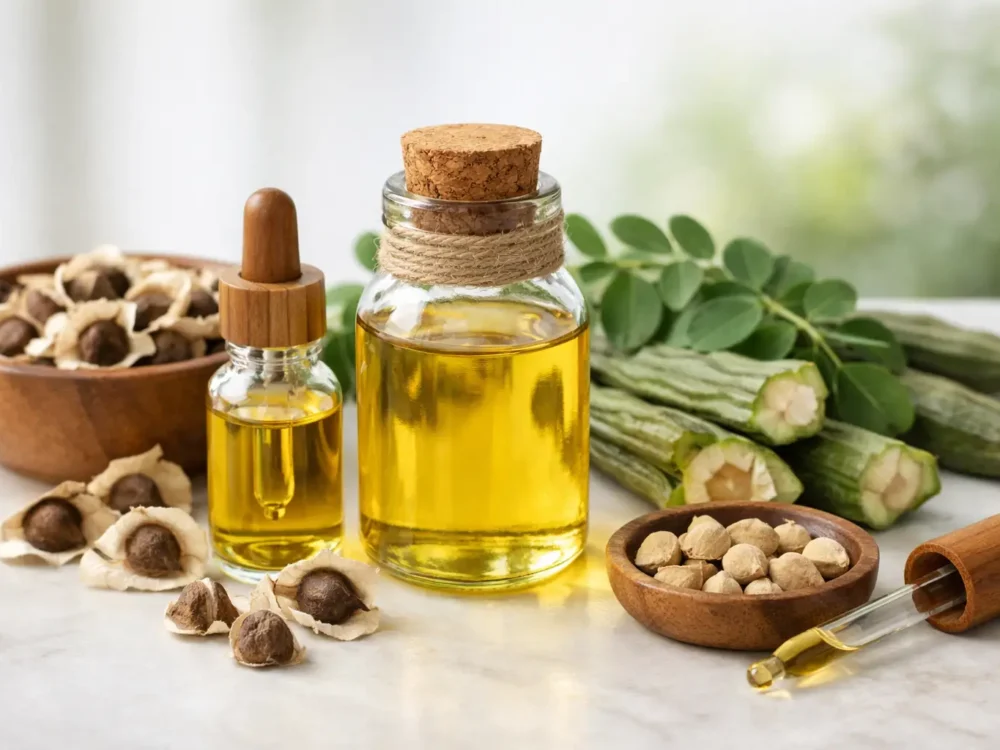
A good wellness staple earns its place by doing more than one job well. That is exactly why interest in moringa seed oil benefits keeps growing among people who want cleaner routines, fewer unnecessary ingredients, and products that are easy to use every day.
Pressed from the seeds of the moringa tree, this oil has a lighter feel than many people expect. It is often used for skin and hair, but the real appeal is how practical it is. You get a plant-based oil that feels elegant, absorbs well, and fits into a routine without turning it into a 10-step project.
What makes moringa seed oil different?
Moringa seed oil stands out because of its fatty acid profile, especially its high oleic acid content. Oleic acid is known for helping soften and support the skin barrier, which is one reason this oil is popular in skincare. It also contains naturally occurring antioxidant compounds, which adds to its reputation as a protective, conditioning oil.
Texture matters too. Some botanical oils feel heavy, greasy, or sit on top of the skin. Moringa seed oil is usually smoother and more lightweight by comparison. That makes it appealing for busy routines, warm climates, and anyone who wants the nourishment of an oil without the messy finish.
7 moringa seed oil benefits worth knowing
1. It helps support the skin barrier
One of the most talked-about moringa seed oil benefits is barrier support. Skin does its best work when it can hold onto moisture and defend itself from daily stressors like dry air, frequent cleansing, and environmental exposure. Because moringa seed oil is rich in emollient fatty acids, it helps skin feel softer and less tight.
This does not mean it replaces a full skincare routine for everyone. If your skin is very dry, you may still need a richer cream on top. But for many people, especially those with normal to dry skin, it can be a simple way to reduce that dry, stretched feeling after washing.
2. It seals in moisture without feeling overly heavy
Hydration is not only about adding water to the skin. It is also about keeping that moisture from escaping too quickly. Moringa seed oil works well as a finishing step because it helps reduce moisture loss while still feeling relatively light.
That balance matters. A lot of consumers want nourishment but do not want the greasy feel that can make daytime wear uncomfortable. If you live in a humid climate or prefer minimalist skincare, this is one reason moringa seed oil often feels easier to stick with consistently.
3. It may leave skin looking smoother and more radiant
Dull-looking skin is often less about needing harsh exfoliation and more about needing better conditioning. When skin is properly supported, its surface tends to look smoother, calmer, and naturally brighter. Moringa seed oil can help create that healthy-looking finish.
This is one of those benefits where consistency matters more than overnight expectations. It is not a quick fix, and it is not the same as an active treatment aimed at pigmentation or breakouts. What it does offer is a more polished, nourished look over time, especially when used on skin that is feeling dry or tired.
4. It can help soften dry areas on the body
Moringa seed oil is not only for the face. It can work especially well on dry patches like elbows, knees, cuticles, and hands. These areas often need something more conditioning than a light lotion, but not everyone wants a thick balm during the day.
A few drops massaged into damp skin can help these areas feel smoother and more comfortable. If you wash your hands often, work in air conditioning, or spend time in the gym and shower frequently, this kind of targeted support can make a noticeable difference.
5. It can improve the look and feel of hair
Hair oils are only useful if people actually want to use them. That usually comes down to feel. Moringa seed oil is valued in hair care because it can help soften strands, tame dry ends, and add a healthier-looking finish without always feeling excessively greasy.
How well it works depends on hair type. If your hair is fine, you may prefer just a drop or two on the ends. If your hair is thicker, textured, or processed, you may be able to use more. It is best thought of as a finishing and conditioning oil rather than a miracle solution for every scalp or hair concern.
6. It may help reduce the look of frizz and roughness
Frizz often has less to do with “bad hair” and more to do with dryness, damage, humidity, and raised cuticles. A smoothing oil can help the surface of the hair look more controlled and polished. Moringa seed oil fits well here because it coats lightly, adds slip, and can make strands feel less rough.
This is especially useful for people who heat-style, color-treat, or spend time outdoors. It will not repair severe damage on its own, but it can help hair look better managed between washes and treatments.
Moringa seed oil benefits for different skin types
Not every oil works the same way for every face, and that is where nuance matters. People with dry or mature skin often like moringa seed oil because it feels comforting and helps support softness. Those with combination skin may prefer to use it at night or only on drier areas.
If you are oily or acne-prone, the answer is more mixed. Some people do well with lightweight plant oils, while others find that any extra oil feels like too much. That does not automatically make moringa seed oil a bad choice, but patch testing is smart. Start small, monitor how your skin responds, and avoid assuming that “natural” always means universally compatible.
How to use moringa seed oil in a daily routine
For skin, the simplest method is to apply 2 to 4 drops after water-based products and before or after moisturizer, depending on the texture of the products you already use. Press it into slightly damp skin so it spreads more easily and feels less heavy.
For hair, use a very small amount on mid-lengths and ends. If you are using it as a pre-wash treatment, you can apply more generously before shampooing. If you want shine and frizz control, less is usually better.
For body care, apply it right after a shower while skin is still a little damp. That helps lock in moisture and gives the oil a smoother finish.
What to look for when buying moringa seed oil
Quality makes a real difference with oils. Look for a product that clearly states it is pure moringa seed oil and ideally cold-pressed. A simpler ingredient list is usually better if your goal is to get the direct benefits of the oil itself.
Packaging matters too. A dark bottle helps protect the oil from light exposure, and a pump or dropper makes daily use easier and less wasteful. If clean-label cues matter to you, it also makes sense to check for standards like vegan, cruelty-free, non-GMO, or organic positioning.
Convenience is not a small detail. The best product is usually the one you will actually use consistently. That is why routine-friendly wellness products continue to perform well. They fit real life instead of asking for perfect habits.
When moringa seed oil is worth trying
Moringa seed oil is worth a look if your current routine feels too complicated, too heavy, or not moisturizing enough. It is especially appealing if you want one product that can support skin, hair, and dry body areas without cluttering your shelf.
It may be less ideal if you strongly prefer matte skincare, are highly reactive to facial oils, or want a treatment targeted at a specific medical skin concern. In those cases, it can still have a place, but probably as a supporting product rather than the main event.
For shoppers who care about clean ingredients and practical wellness, this is where moringa seed oil makes sense. It is simple, versatile, and easy to work into a daily routine. If you are building a cleaner lineup of everyday essentials, Sterling Nutrition offers wellness-forward options designed for that exact kind of use.
The smartest routines are usually the ones you can keep. If moringa seed oil helps your skin feel comfortable, your hair look smoother, and your shelf stay simpler, that is a benefit worth paying attention to.